
There is nothing quite as heart-sinking as finishing a beautiful new deck only to have a building inspector tell you to tear the railings down. Building codes are the “hidden blueprint” of every aluminum railing system. While they might seem restrictive, they provide a standardized framework for safety that ensures your home is a secure environment for guests, children, and future buyers.
Stair Railings: A Different Set of Rules
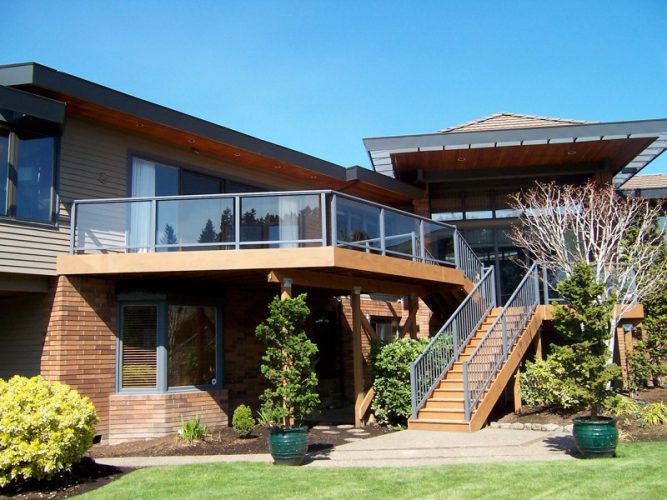
While a flat deck railing is straightforward, stairs introduce a new level of complexity. The codes for stair guards and handrails are often the most scrutinized by inspectors.
-
Handrail Height: Stair railings (often called “graspable” rails) generally must be between 34 and 38 inches high, measured vertically from the “nosing” (the edge) of the stair tread.
-
Graspability: Not every top rail is a “handrail.” If your aluminum railing has a wide, flat “cocktail rail” top, it might not meet the code for graspability. In these cases, you may need to install a secondary, round aluminum pipe rail on the inside of the stairs so that a hand can fully wrap around it for support.
-
The Triangle Rule: The triangular opening formed by the stair riser, tread, and bottom rail must be small enough that a 6-inch sphere cannot pass through.
Material Choice and Code Compliance
One of the reasons aluminum has become the “contractor’s darling” is that most reputable aluminum railing kits come pre-certified. Manufacturers test their systems in labs and provide “engineering stamps” or documentation that you can hand directly to your local building department.
-
Wood vs. Aluminum: With wood, the inspector has to judge the quality of the lumber and the fasteners on-site. With an aluminum system, the inspector knows exactly what the material’s shear strength is based on the manufacturer’s spec sheet.
-
Longevity of Compliance: Codes don’t just apply the day you build; they apply as long as the structure stands. Aluminum’s resistance to rust and rot means your railing won’t become “out of code” due to structural decay five years down the road.
Pro-Tip: Check Your Local Amendments
While the IRC provides a national baseline, many cities have “local amendments.” Coastal towns might have higher wind-load requirements, and certain urban areas might require taller railings for high-rise balconies. Always call your local building office before ordering your aluminum kit. Tell them you are installing an “extruded aluminum guardrail system” and ask for their specific height and picket-spacing requirements. This ten-minute phone call can save you thousands of dollars in potential rework.