

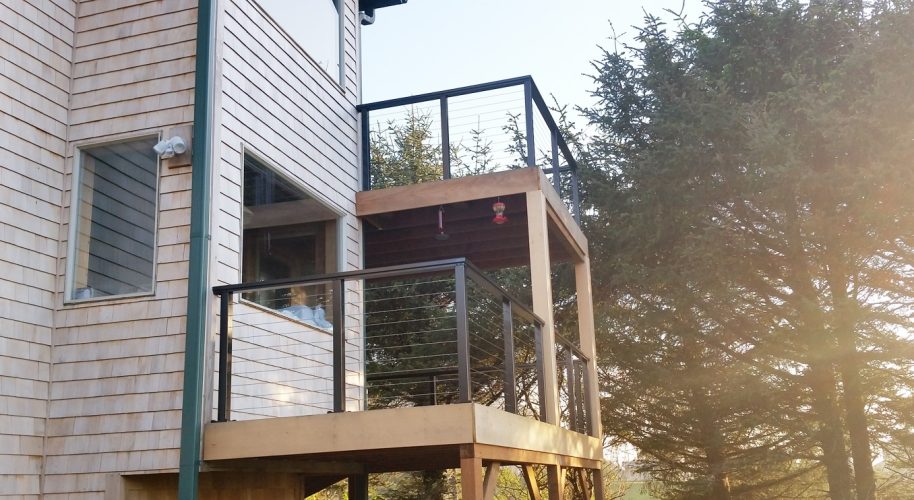
One of the greatest joys of owning an aluminum railing system is the “peace of mind” factor. Unlike iron, which demands a constant battle against rust, or wood, which requires a budget for annual staining, aluminum is remarkably self-sufficient. However, to keep your railing looking “architectural grade,” a little bit of seasonal attention goes a long way. This guide breaks down exactly what you should be doing throughout the year to ensure your railings remain the envy of the neighborhood.
The Spring Inspection: Check Your Hardware
After a long winter of freezing and thawing, the metal and the structure it’s attached to will have gone through significant thermal expansion and contraction.
-
Fastener Check: Take five minutes to walk the perimeter of your railing. Check the base plates where the posts meet the deck. If a bolt has loosened slightly due to the house settling or the wood shifting, give it a quick turn with a wrench.
-
Cap Check: Ensure that the post caps and any decorative trim are still seated firmly. Occasionally, heavy snow sliding off a roof can dislodge these “snap-fit” components.
-
Drainage: Ensure the small “weep holes” at the bottom of the railing (if your model has them) are clear of debris. This allows any internal condensation to escape, preventing ice build-up inside the rails during the next winter.
The “Coastal” Exception: Special Care for Salt Air
If you live within five miles of the ocean, your maintenance needs are slightly different. While aluminum doesn’t rust, salt spray can cause “pitting” or “filiform corrosion” if left to sit on the surface for months at a time. For coastal homeowners, we recommend a fresh-water rinse once a month. This simply washes away the salt crystals before they have a chance to react with the finish. Some experts even recommend a light coat of high-quality automotive wax once a year for coastal railings; this creates an extra barrier that makes salt and grime slide right off.
Repairing Scratches and Scuffs
Life happens. Maybe a piece of patio furniture blew over in a storm, or a bicycle handlebar scuffed the top rail. One of the best features of aluminum is that a scratch is rarely an emergency. Because the metal doesn’t rust, a scratch is a cosmetic issue rather than a structural one. Most manufacturers sell “touch-up pens” specifically matched to their powder-coat colors (like Textured Black or Bronze). Simply clean the area, apply a small dab of the paint, and the “wound” disappears. This proactive approach prevents small scuffs from becoming noticeable eyesores, keeping your home’s curb appeal at its absolute peak for decades.